
It's a Tuesday afternoon and you're supposed to be working on a client project. Instead, you're down a rabbit hole of YouTube tutorials trying to figure out if that software subscription counts as a business expense.
Sound familiar?
When you go out on your own, nobody hands you a bookkeeping manual. You figure it out as you go. Googling things, asking other business owners, hoping for the best. And for a while, that can work. Until it really, really doesn't.
Bookkeeping for the self-employed doesn't have to be complicated. You don't need an accounting degree, but you should understand the basics and build a simple system that keeps you out of panic mode come tax time.
What Bookkeeping for the Self-Employed Actually Means
Bookkeeping is the process of recording and organizing your financial transactions. That's it. Every time money comes in or goes out of your business, that's a transaction that needs to be tracked.
For self-employed business owners, this means keeping records of:
Every payment you receive from your clients or customers
Every business expense you pay
Any money you transfer between personal and business accounts (aka any money you pay yourself)
The goal is to know where your money is going, have accurate records for tax time, and make business decisions based on real data instead of guesswork. You don’t have to suddenly become a numbers person to do this for your business!
Why Money Management Looks Different When You're Self-Employed
When you work a “regular” job, your employer handles most of the financial admin. Taxes get withheld automatically, expenses are the company's problem, and you simply get a W-2 to file at the end of the year.
When you're self-employed, ALL of those things are now your responsibility.
You're responsible for setting aside money for taxes, including self-employment tax, which catches a lot of people off guard. You're tracking which expenses are deductible. You're reconciling your bank accounts. And if you fall behind, there's no payroll department to catch the mistake.
That's not meant to scare you. It's just the reality of owning a business, and the reason that getting your bookkeeping right from the start actually matters.
Four Things You Need to Track for Accurate Bookkeeping
1. Income
Every payment you receive needs to be recorded:
the date
the amount
who it came from
what it was for
If you invoice clients, make sure every paid invoice is captured. If clients pay through a platform like Stripe or PayPal, that income still needs to be recorded even if it doesn't hit your bank account right away. Payments across multiple channels are easy to lose track of, so make a habit of recording income as it comes in, regardless of how it was paid.
2. Expenses
Any money you spend to run your business is a potential deduction. Here are some examples:
Software subscriptions
Home office costs
Equipment
Professional development
Contractor payments
Keep track of all of it. The category matters, too. A meal with a client gets tagged differently than a new laptop.
3. Bank and credit card activity
Your bookkeeping should match your actual bank and credit card statements. This process is called reconciliation, and it's how you catch errors, spot duplicate charges, and make sure nothing slips through the cracks. Think of it as a monthly check that your numbers are telling the truth.
4. Receipts and documentation
The IRS doesn't just take your word for it. Keep records of your expenses: digital receipts in a folder, photos in an app, a simple system in a shared drive. You don't need to be obsessive about it, but you do need something.

The Simplest Way to Set Up Your Books
You don't need a complicated system. You need one that you'll actually use. For most self-employed business owners, the starting point looks like this:
Open a separate business bank account.
This is the single most important thing you can do for your bookkeeping. When business and personal money are mixed together, every transaction becomes a guessing game. What starts as a small shortcut becomes a significant headache by tax time. Separate accounts make everything cleaner, faster, and easier to track.
Pick an accounting tool.
QuickBooks® Online is the industry standard, and for good reason. It's built for small business bookkeeping and connects directly to your bank accounts. There are other options out there, but if you're planning to work with a bookkeeper or CPA down the road, QuickBooks® Online makes that handoff much smoother. (It's also the only platform I work in, so I know it inside and out!)
Set up a chart of accounts.
This is essentially a list of categories for your income and expenses: things like "client income," "software and subscriptions," "advertising," and "professional services." Your accounting tool will have a default setup you can customize from there.
Get into a monthly rhythm.
Bookkeeping isn't a once-a-year project (at least it shouldn’t be if you want to save yourself a headache!). Set aside time each month, even just an hour, to categorize transactions, review your numbers, and make sure everything lines up. Monthly check-ins keep the work manageable so you’re never staring down six months of backlog.
Two Money Habits That Will Save You Later
A lot of bookkeeping problems trace back to two things: waiting too long and staying too disorganized to catch mistakes early.
If you only look at your books in March, you're not really using them as a working tool. You're just cleaning up. The longer you wait, the harder it gets to remember what a transaction was for, find a missing receipt, or spot an error.
The habits that matter most are simple:
Separate accounts
Consistent categorization
Monthly check-ins
Build these habits early and you won't have to unlearn bad ones later. The business owners who find bookkeeping stressful are almost always the ones who let things pile up. The ones who stay on top of it will tell you it barely takes any time at all!
When to Consider Handing it Off
DIYing your bookkeeping makes sense when you're starting out. But there's a point where the time you're spending, and the risk of getting things wrong, starts to cost more than it's worth.
If you're earning over six figures, spending hours every month on bookkeeping, feeling uncertain about whether your numbers are totally accurate, or dreading every tax season, those are signs it might be time to bring in some help.
A bookkeeper doesn't just categorize your transactions. They catch errors before they become problems, deliver reports that actually help you make decisions, and keep everything clean and ready for your CPA at tax time. Plus you get all that time back every month so you can focus on the work you actually started your business to do!
Bookkeeping for the self-employed doesn't have to feel like a second job. Start with the basics, build a simple system, and stay consistent. Your future self, especially around tax time, will thank you.
If you're not sure where your books currently stand, a diagnostic review is a great place to start. Book a free discovery call and we'll take a look together.
Ready to start tracking smarter?
Download the free guide!
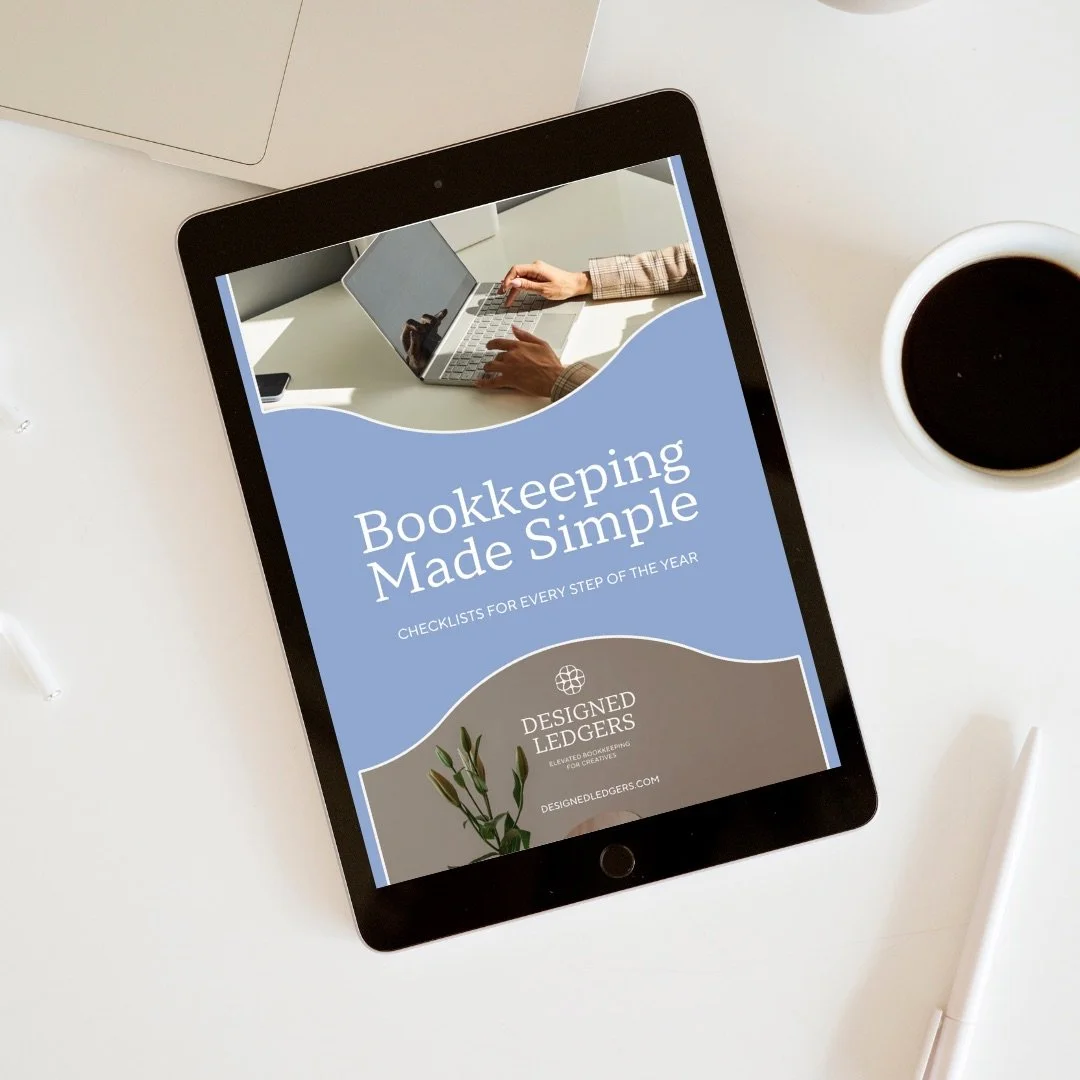
Bookkeeping Checklists for Every Season
Get the easy-to-follow checklists that help you feel a little more in control and a lot less overwhelmed when it comes to your numbers. Learn what to track and how to set up a system that works (without making it a full-time job!).
Continue Reading