How to Price Your Services Based on Your Actual Costs

Most creative business owners set their prices one of two ways: they Google what other people in their industry charge, or they pick a number that feels about right and hope it works out.
Neither of those approaches is necessarily wrong. But they have the same problem. They have nothing to do with your actual costs.
Which is why a lot of business owners are working hard, staying busy, and still wondering why there's not more money left at the end of the month to pay themselves. More often than not, it comes down to prices that weren’t built on real numbers.
Here's how to fix that.
Why Your Actual Costs Have to Be the Starting Point
When you price based on what competitors charge or what feels comfortable to ask for, you're making an educated guess. Maybe it's close. Maybe it's not. You won't really know until you look at the numbers, and by the time most people look, they've already spent months or years undercharging.
Pricing based on your actual costs means starting with what it really costs to run your business and deliver your services, then working forward to a rate that covers those costs and leaves you with enough profit to pay yourself.
This is where clean bookkeeping earns its keep. If your income and expenses are tracked accurately every month, the data you need to price confidently is already there. You just need to know how to understand those numbers. So let’s get into it!
Step One: Add Up What it Actually Costs to Run Your Business
Before you can set a profitable rate, you need a clear picture of what you spend each month.
This includes the obvious things, like:
Software subscriptions
Contractor payments
Marketing spend
Equipment
But it also includes the costs that tend to get overlooked when you're self-employed:
Health insurance
Retirement contributions
Professional development
The portion of your phone and internet bills used for work
Business taxes
Add all of that up for a typical month (and don’t forget to include your annual expenses, like accountant fees, business insurance, or annual software renewals) and divide by 12 to get a monthly average. That total is your baseline cost of doing business before you've paid yourself a single dollar.
If you haven't been tracking expenses consistently, this step will likely feel the hardest. But it's also the one that changes your whole perspective on pricing. Most people are surprised by how much it actually costs to run their business once they add it all up.
Step Two: Factor in Your Own Pay
This is the step that gets skipped more than any other.
Your own income needs to be part of the calculation when you're setting prices. Not an afterthought. Not whatever's left over after expenses. A real number you're actively pricing around.
Decide what you want to pay yourself each month and add it to your monthly expenses. Now you have a true picture of what your business needs to bring in for you to sustain the business and take home an actual paycheck.
A lot of creative business owners price for revenue without pricing for profit. There's a difference. Revenue is what comes in. Profit is what you actually keep after expenses, including paying yourself. If your prices don't account for both, you'll always feel like you're working more than the money reflects.
Step Three: Figure Out Your Real Billable Hours
Once you know your monthly number, you need to figure out how many hours you actually have available to sell.
Start with your total working hours in a month. Then subtract the time you spend on things that aren't directly billable: admin work, marketing, client calls that aren't part of a paid project, bookkeeping, networking. For most self-employed business owners, non-billable work takes up somewhere between 30 and 50 percent of working hours.
What's left is your realistic billable capacity. Divide your monthly revenue target by that number and you have a minimum hourly rate, the floor below which you can't go without struggling to pay your business expenses and cover your own income.
This is often the moment people realize their current rates don't actually work. It might feel uncomfortable, but it’s better to know now so you can adjust your prices accordingly, rather than keep wondering why the math never seems to add up.

Step Four: Look at Your Profit and Loss Statement
If you're using QuickBooks®, your profit and loss statement already has most of what you need for this exercise.
It shows your total income, your total expenses, and the difference between them. If that difference is smaller than what you want to be taking home, or if it's negative, your prices need to move.
The profit and loss statement is also useful for spotting where your money is actually going. Sometimes the pricing problem isn't the rate itself. It's that expenses have crept up without a corresponding increase in what you're charging. A software subscription here, a contractor cost there. Small increases that individually feel manageable but collectively eat into your profit margin.
If your bookkeeping is accurate and up to date, this review takes about ten minutes. If they're not, that's worth fixing before you try to make any serious decisions about pricing.
Step Five: Revisit Your Prices at Least Once a Year
Pricing isn't a one-time decision. Your costs change, your experience grows, your market shifts. A rate that made sense two years ago may not make sense now.
Most business owners set their prices once and then feel uncomfortable raising them, either because they worry about losing clients or because they haven't looked at their numbers closely enough to know an increase is justified. Both of those things are fixable.
If your expenses have gone up, your prices should follow. If you're turning away work because you're at capacity, your prices should go up. If you've added skills, certifications, or years of experience since you last set your rates, that has value too.
A simple habit: at least once a year, sit down with your profit and loss statement and ask whether your current rates still make sense. If the answer is no, that's just a number that needs adjusting.
This is What Your Books Are Actually For
Everything in this process depends on knowing your real numbers. Not a rough estimate, not what you remember spending or making last month. The real figures, tracked consistently, organized clearly.
That's what bookkeeping gives you. When your books are accurate and up to date, pricing decisions stop feeling like guesswork and start feeling like basic math. You can see exactly what your business costs to run, exactly what you're bringing in, and exactly how much you can pay yourself with your current rates.
The business owners who feel confident about how to price their services almost always have one thing in common: they actually look at their numbers. Not just at tax time, but throughout the year.
If you're not sure your books are giving you an accurate picture, that's the place to start. Book a free discovery call and let’s talk about what your numbers are actually telling you.
Ready to start tracking smarter?
Download the free guide!
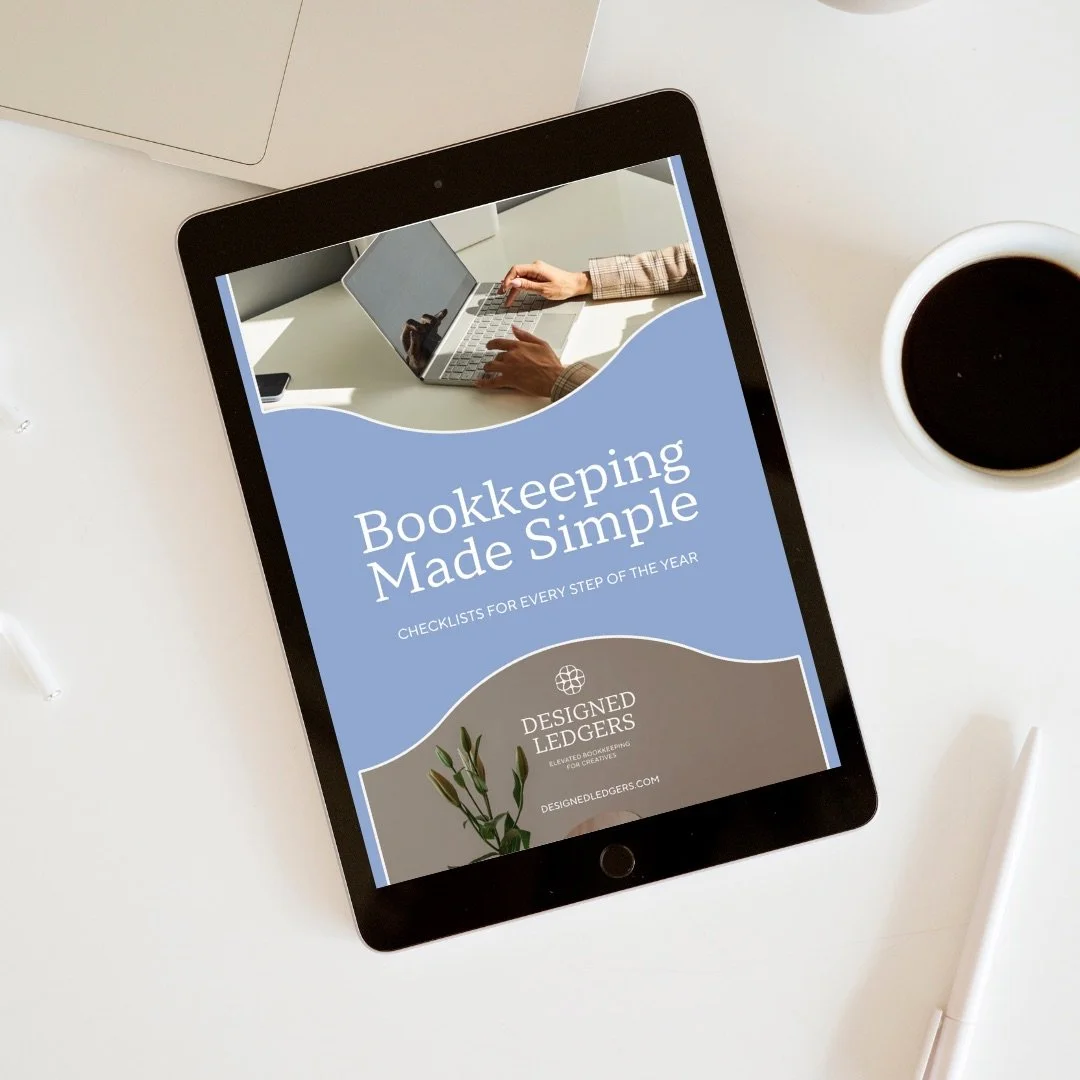
Bookkeeping Checklists for Every Season
Get the easy-to-follow checklists that help you feel a little more in control and a lot less overwhelmed when it comes to your numbers. Learn what to track and how to set up a system that works (without making it a full-time job!).
Continue Reading