Bookkeeping Red Flags Your CPA Wishes You'd Fix

Every year, CPAs open up their clients' books and wince.
Tax season has a way of turning small bookkeeping mistakes into big, expensive problems.
The tricky part is that most of these issues are invisible until someone actually sits down and looks at your books. By that point, your CPA is doing cleanup work instead of just filing taxes, and that extra time shows up on your bill.
I see the same patterns come up over and over, whether I'm doing a diagnostic review for a new client or cleaning up books that have been on autopilot for a year. Here's what to look for, and what to do about it.
Your Business and Personal Expenses Are Mixed Together
This is the one I see most often, and it creates the most extra work when it’s time to get organized.
When personal and business transactions run through the same account, every transaction becomes a question. Is this deductible? Is this business? Your CPA has to sort through all of it to figure out what actually belongs on your tax return, and that takes time they charge for.
It also means things get missed. Deductions slip through. Numbers don't add up. And the longer it goes on, the messier it gets.
If you haven't already, open a dedicated business checking account and a business credit card and use them only for business. If things are already mixed, a bookkeeper can go back and clean it up. But going forward, keeping them separate makes everything else easier.
Transactions Are Piling Up in "Ask My Accountant"
QuickBooks® Online has a category called "Ask My Accountant." It's supposed to be temporary, a place to park something you're not sure about so you can come back to it. But for a lot of business owners, it turns into a catch-all that never gets touched again.
When your CPA opens your books and sees a long list of transactions sitting there unresolved, they have to go through each one and ask you about it. That back-and-forth adds up fast.
The same thing happens with inconsistent categories. If your software subscriptions land in "office expenses" one month and "miscellaneous" the next, your reports stop being useful. I can't tell you which of your offers is most profitable if the expenses tied to them are scattered across five different categories.
Getting on a monthly categorization schedule fixes this. And if you're not sure where things belong, setting up a clean chart of accounts from the start takes most of the guesswork out of it.
Your Accounts Haven't Been Reconciled
Reconciliation is how you confirm that your bookkeeping actually matches what happened in your bank account. Every transaction accounted for, every statement matched up.
When it doesn't get done, errors often build up behind-the-scenes. A duplicate charge here, a missing payment there, a bank fee that never got recorded. None of it gets caught until someone goes looking. By the time your CPA gets your books, the difference between what the records show and what actually happened can be pretty significant.
Monthly reconciliation is the standard for a reason. It's one of those habits that feels like extra work until you realize how much time it saves everyone at the end of the year.
You're Missing Receipts
Your CPA can categorize a transaction. What they can't do is create documentation that doesn't exist.
If you claim a deduction and the IRS asks for backup, you need to have it. A photo of the receipt, a forwarded email, something in a folder somewhere. You don't need to be obsessive about it, but you do need a system.
The easiest approach: photograph receipts on the spot or forward digital receipts to a dedicated folder as they come in.
Set it up once and it takes almost no time. The paper trail matters, especially for larger expenses, client meals, travel, and home office deductions.
Income is Coming in Through Multiple Channels and Not All of it is Getting Recorded
Invoices, Stripe, PayPal, a direct bank transfer here and there. When payments come in through a lot of different places, it's easy for something to slip through, especially when you're busy.
A client pays through a platform you don't check often. A check gets deposited but never logged. A payment comes in during a hectic week and you mean to record it later.
Your profit and loss statement is only useful if it reflects all of your income. Inconsistent income tracking means your reports are off, your cash flow picture isn't accurate, and your CPA is working with incomplete numbers. Build a habit of recording income as it comes in, regardless of how it was paid.

Owner's Draws and Transfers Aren't Being Documented
If you've taken money out of your business as an owner's draw, loaned money to your business, or moved funds between accounts, those transactions need to be recorded correctly.
When they're not, they show up as unexplained deposits or withdrawals that someone has to track down later. Owner's draws specifically get mishandled a lot. They're not an expense, they affect your equity, and they need their own category. If you're not sure how yours are being handled, it's worth asking your bookkeeper or CPA to take a look.
Nothing Has Been Touched Since Last Tax Season
I get it. Bookkeeping is easy to push off, and then push off again, and then suddenly its been eight months.
When your CPA gets your books in January and the last activity was April, they're doing a full year of cleanup before they can file anything. That's extra hours, a bigger bill, and books that weren't doing anything useful for you all year.
Your financial reports are most valuable when you're looking at them regularly, not just once a year. If you know which offers are bringing in the most money, which months tend to be slow, where your expenses are actually going, you can make better decisions.
That's the difference between bookkeeping as a compliance task and bookkeeping as something that actually helps your business.
Any of These Bookkeeping Mistakes Sound Familiar?
These are the most common issues I see, and none of them mean you've done something terrible. They just mean it's time to get things cleaned up.
A diagnostic review is a good starting point. I go through your books, show you exactly what's there, and give you a clear picture of what needs to be fixed. From there you can decide whether you want to handle it yourself or hand it off.
The earlier you catch these things, the less work it is. And your CPA will genuinely appreciate it.
Book a free discovery call and let’s talk about how we can clean up your books together.
Ready to start tracking smarter?
Download the free guide!
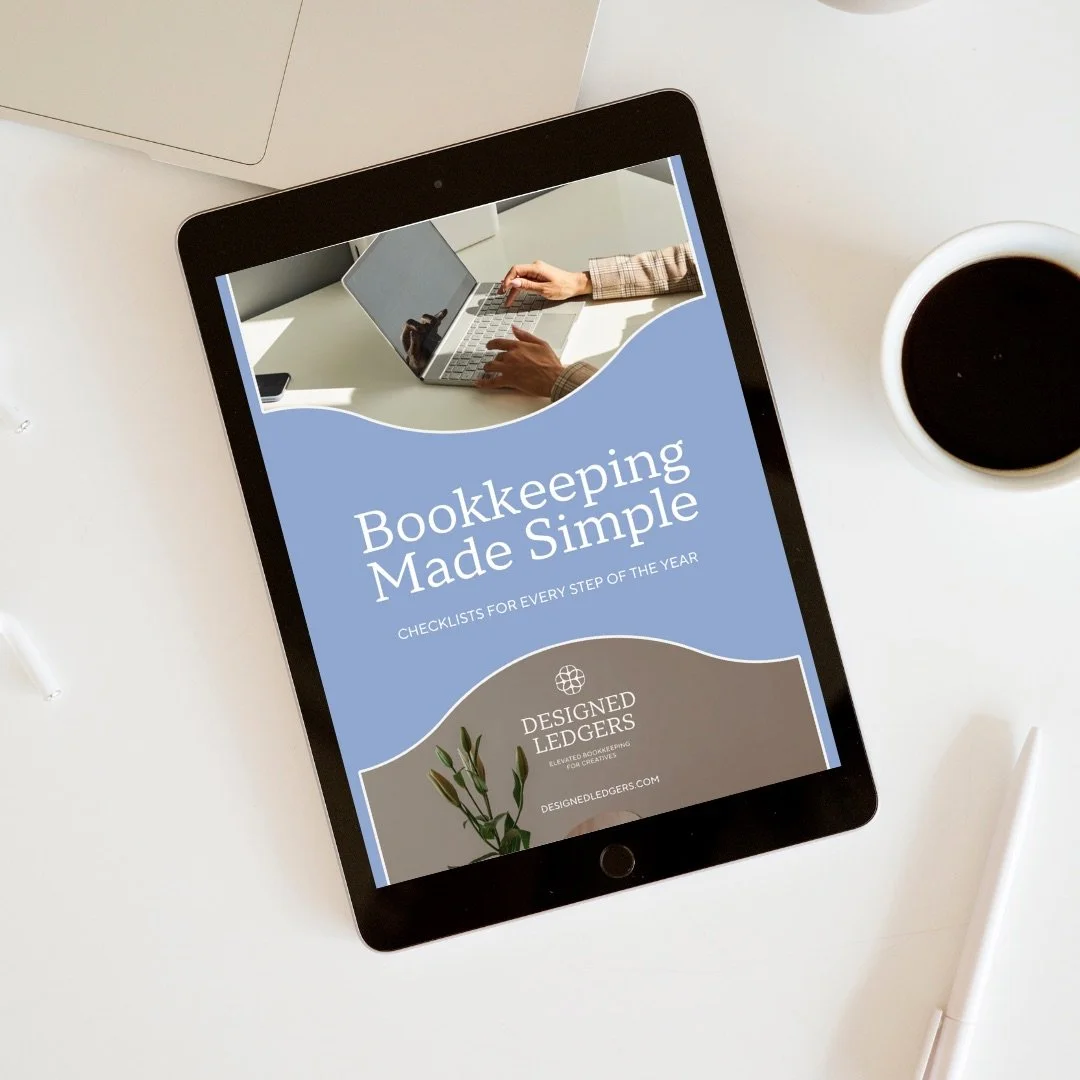
Bookkeeping Checklists for Every Season
Get the easy-to-follow checklists that help you feel a little more in control and a lot less overwhelmed when it comes to your numbers. Learn what to track and how to set up a system that works (without making it a full-time job!).
Continue Reading